About the Project
This project is dedicated to studying and digitizing lontar manuscripts — historical palm-leaf texts that have preserved centuries of Indonesian history, language, and culture. Our work brings together artificial intelligence, paleography, and heritage studies.
We aim to safeguard this invaluable cultural heritage by developing systems for handwriting recognition, transliteration, translation, and text reconstruction. These tools support historical Indonesian languages such as Old Sundanese, Old Javanese, Old Balinese, and others, helping to create digital archives that are accessible to both scholars and the wider public.
What is Lontar?
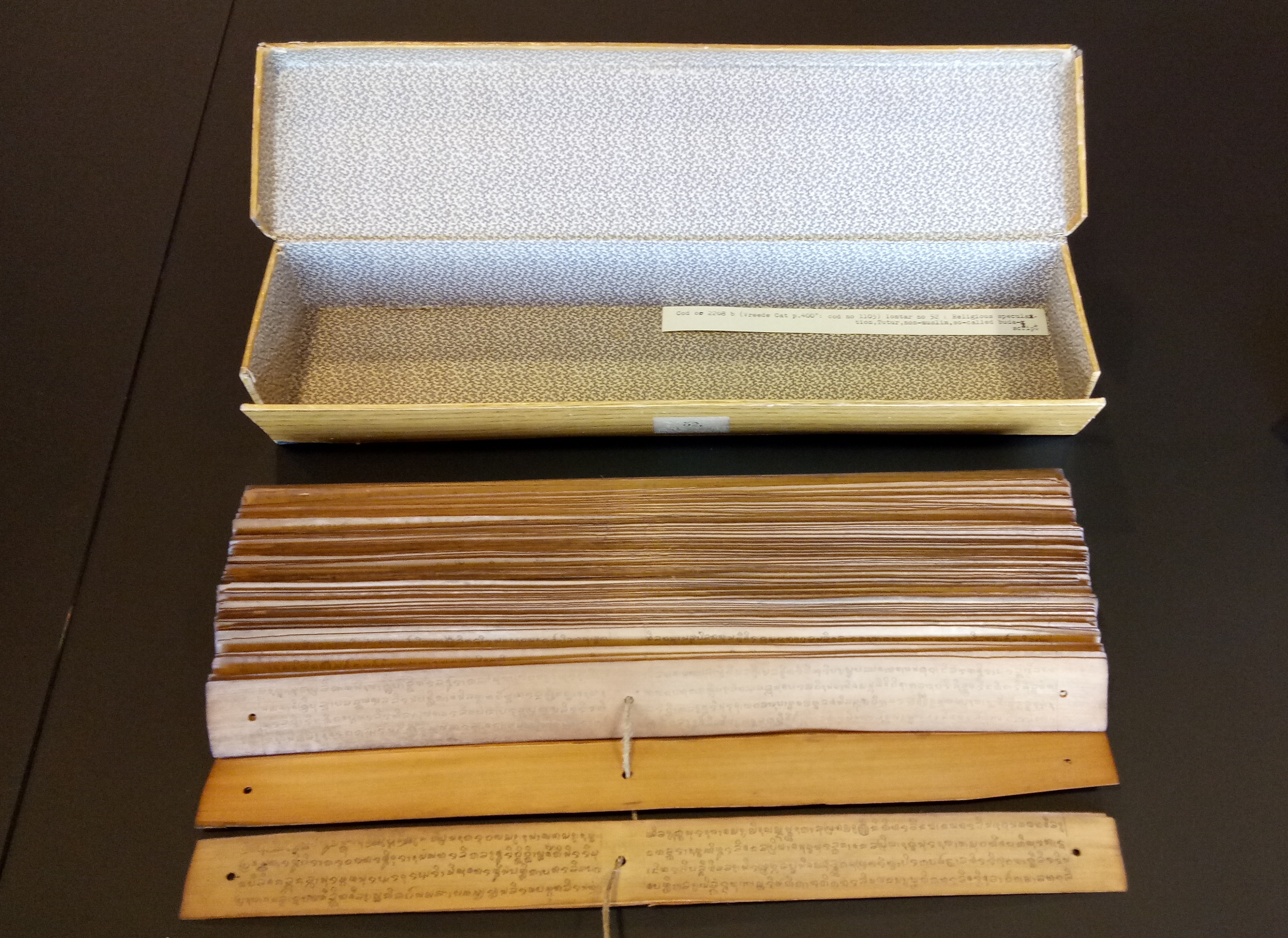
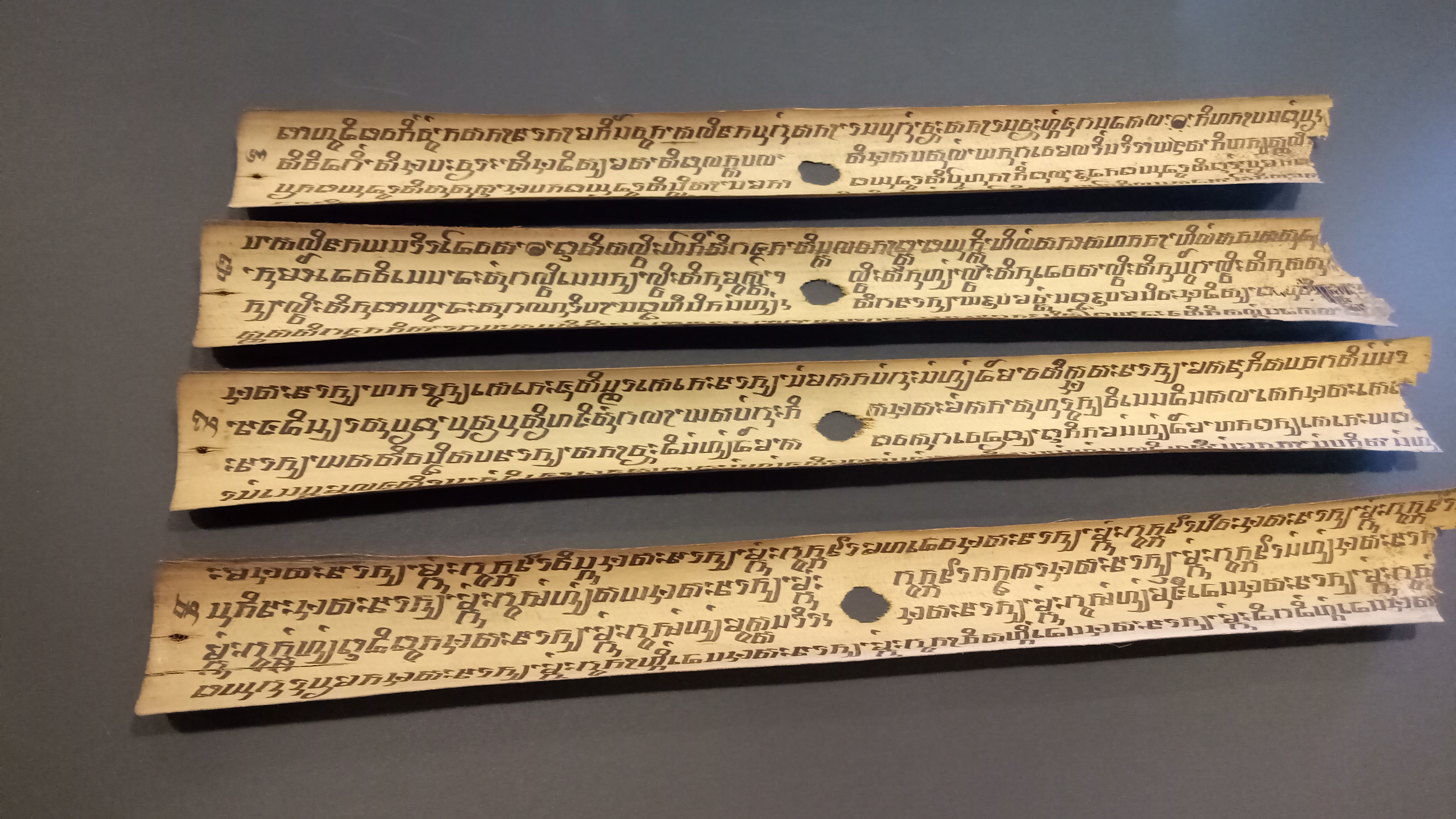
Lontar is a particular kind of writing material made of palm leaves used in Bali, Lombok, Java, Madura, and other islands in Indonesia. The leaves are carefully processed to create a surface suitable for writing. The letters were carved onto the surface using a small knife called pangutik or pangrupak. This carving technique creates shallow grooves inscribing the letters. The letters are nearly invisible. To make it more visible, burnt candlenut (kemiri) was applied to the surface, darkening the grooves and making the letters easier to read.
A manuscript consist of a bundle of palm leaves is also called lontar. Each sheet of lontar (lempiran) is tied together by a piece of cord. If you look closely at a lontar, you will notice a circular hole in the center, also in the right and left side. This hole allows the sheets to be tied together with a cord made from processed lontar fibers or any other materials.
Another important element is cakep, a protective cover similar to a book cover, sized to match the dimensions of the lontar sheets it protects. This cakep can be made of various materials, such as bamboo and wood. Palm leaves manuscript covered by cakep is also called cakepan. Some manuscripts are kept in wooden boxes called kropak. Sometimes the kropak is also decorated with carvings or paintings. A manuscript kept in a kropak is also called kropak or kropakan.
Because lontar manuscripts are centuries old, they require special care to ensure their preservation. Despite efforts like storing them in controlled environments and digitization, deterioration still occurs. Digital reconstruction of damaged manuscripts is an important way to ensure future generations can continue to learn from this heritage.